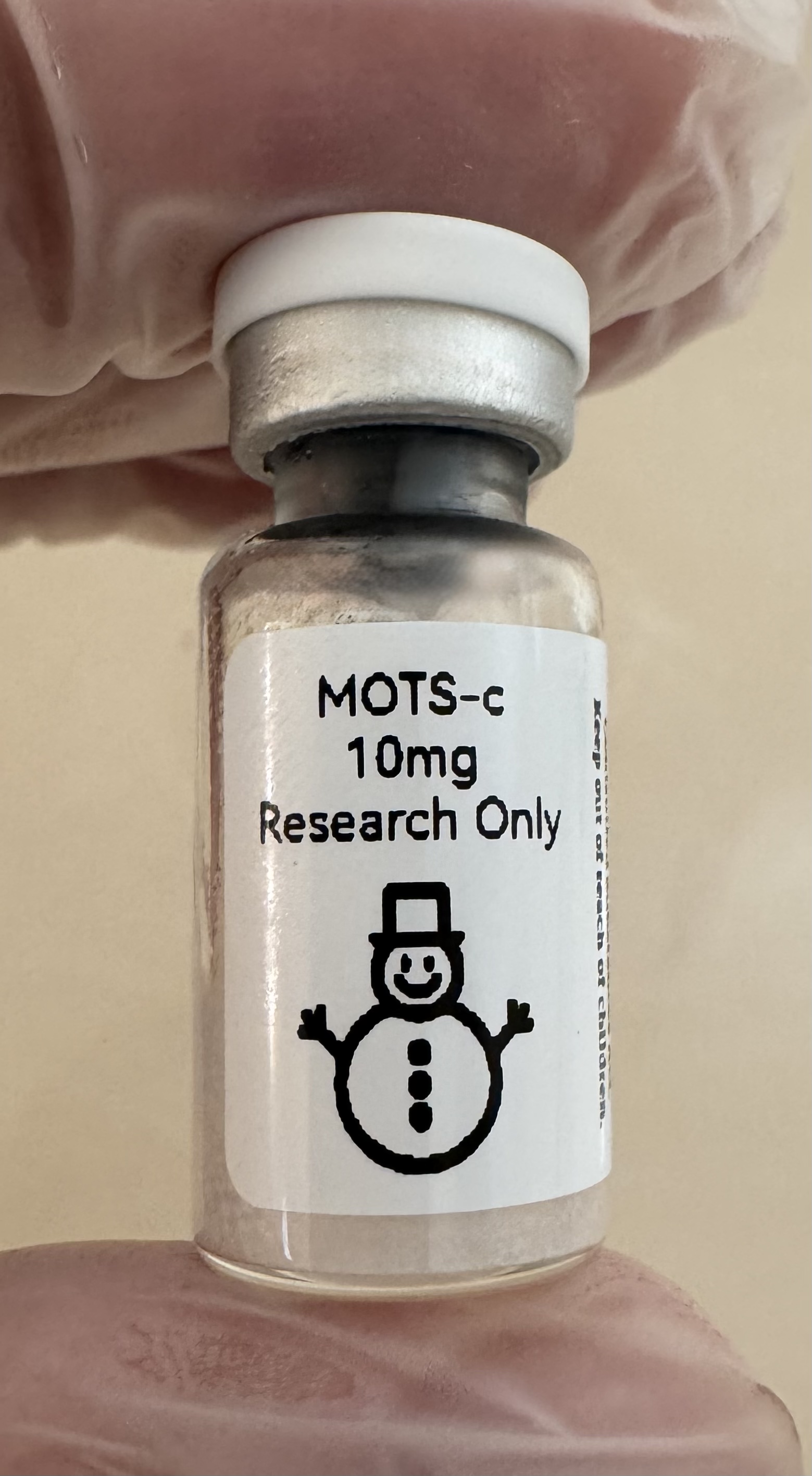
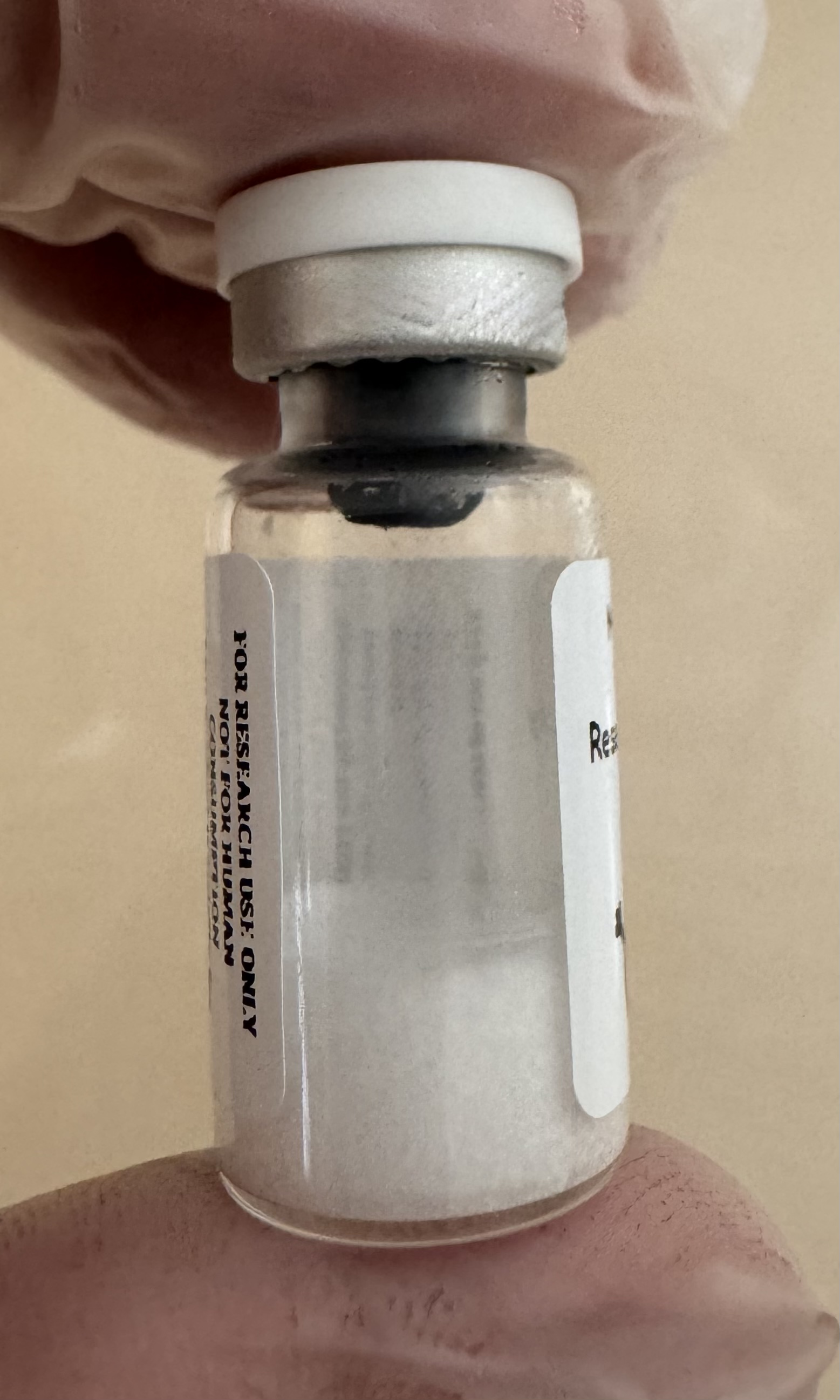
MOTS-c mitochondrial-derived peptide: a research overview
Here's a lovely bit of biology for a cold night: MOTS-c is a mitochondrial-derived peptide, written into our mitochondrial DNA rather than our nuclear genome, and research on the MOTS-c AMPK pathway link is where most of the interest lies.
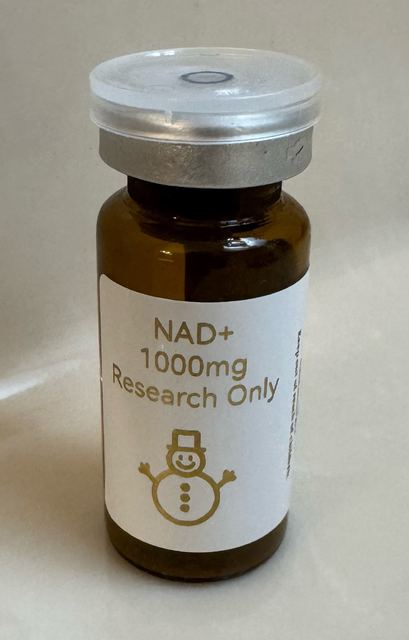
Please note: Snowman Research does not offer dosing information or usage guidance of any kind. Everything we list, this item included, is sold strictly for research purposes and nothing else.
Published findings
MOTS-c was described in 2015, when mice treated with it were protected from insulin resistance linked to aging and high-fat feeding, and from diet-induced obesity [1]. A 2018 follow-up found that under metabolic stress the peptide travels into the nucleus and helps regulate nuclear genes [2]. In 2021, researchers reported better physical performance in young, middle-aged and older mice, including when intermittent treatment started late in life [3]. The same paper observed that exercise raises the body's own MOTS-c levels in human muscle and blood, which is not the same as giving the peptide [3]. According to the FDA, drug products containing MOTS-c have no identified record of human exposure [4].
Mechanism at a glance
The name stands for mitochondrial open reading frame of the 12S rRNA-c, a 16-residue peptide [1]. Skeletal muscle appears to be its main target tissue; there it inhibits the folate cycle and linked purine synthesis, which activates AMPK [1]. In the nucleus it interacts with stress-responsive transcription factors such as NRF2 [2].
Regulatory & WADA notes
The FDA lists MOTS-c among substances formerly in compounding category 2 with nominations withdrawn, citing immunogenicity and characterization concerns [4]. For athletes, MOTS-c is called out by name in the 2026 List as an AMPK activator under section S4.4.1 (metabolic modulators), a class banned at all times [5].
Thanks for reading. Stay warm, and keep your bench notes tidy.
Further reading
- The mitochondrial-derived peptide MOTS-c promotes metabolic homeostasis and reduces obesity and insulin resistance. Cell Metab. 2015;21(3):443-54. PMID 25738459. https://pubmed.ncbi.nlm.nih.gov/25738459/
- The Mitochondrial-Encoded Peptide MOTS-c Translocates to the Nucleus to Regulate Nuclear Gene Expression in Response to Metabolic Stress. Cell Metab. 2018;28(3):516-524.e7. PMID 29983246. https://pubmed.ncbi.nlm.nih.gov/29983246/
- MOTS-c is an exercise-induced mitochondrial-encoded regulator of age-dependent physical decline and muscle homeostasis. Nat Commun. 2021;12(1):470. PMID 33473109. https://pubmed.ncbi.nlm.nih.gov/33473109/
- Certain Bulk Drug Substances for Use in Compounding that May Present Significant Safety Risks. U.S. Food and Drug Administration, human drug compounding web page (accessed Oct 4, 2026). https://www.fda.gov/drugs/human-drug-compounding/certain-bulk-drug-substances-use-compounding-may-present-significant-safety-risks
- World Anti-Doping Code International Standard: Prohibited List 2026 (in effect 1 January 2026). World Anti-Doping Agency, 2026 Prohibited List. https://www.wada-ama.org/sites/default/files/2025-09/2026list_en_final_clean_september_2025.pdf
For laboratory research use only. This product is not intended for human or veterinary use and is not an FDA-approved drug; nothing on this page is medical advice. You must be 21 or older to purchase.