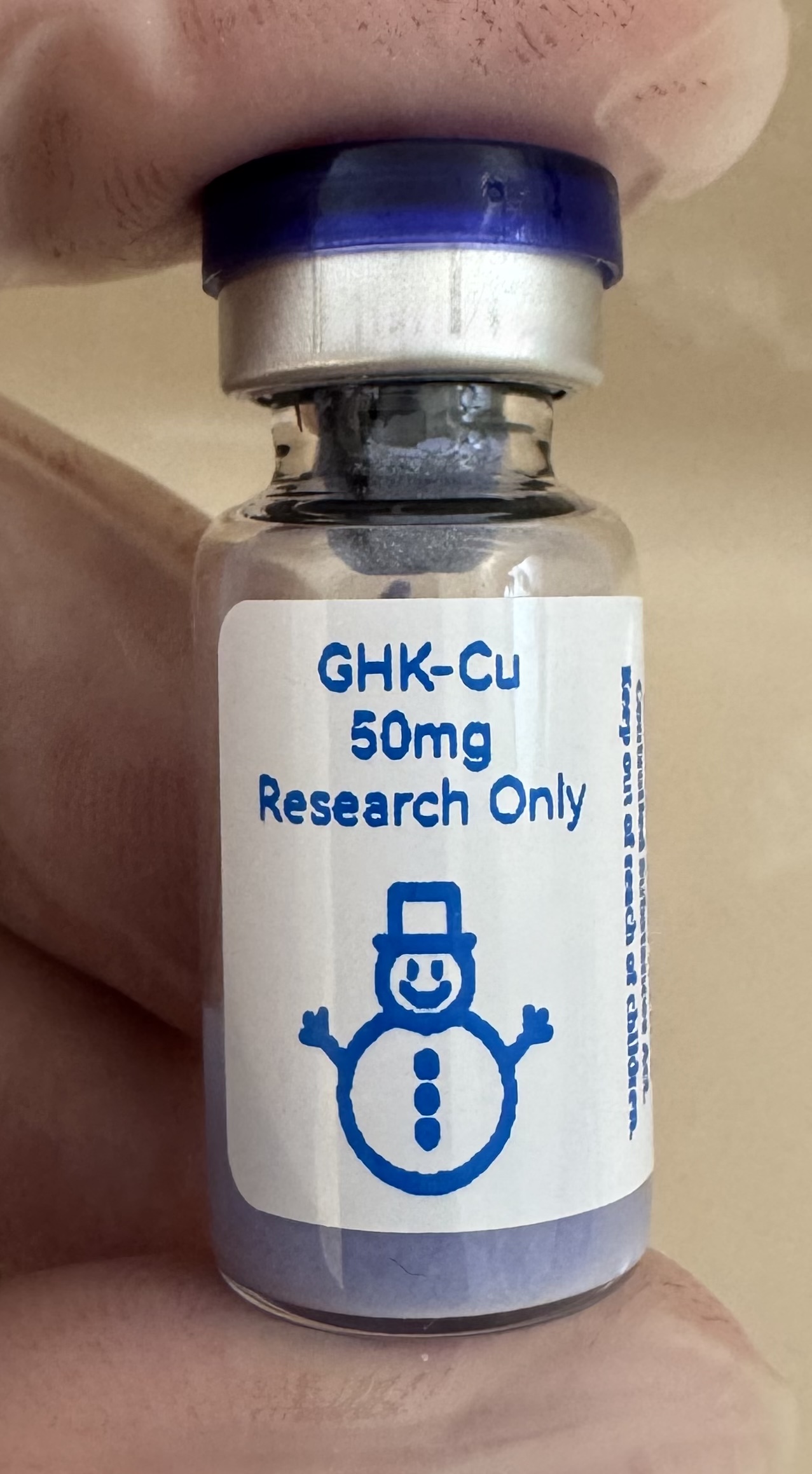
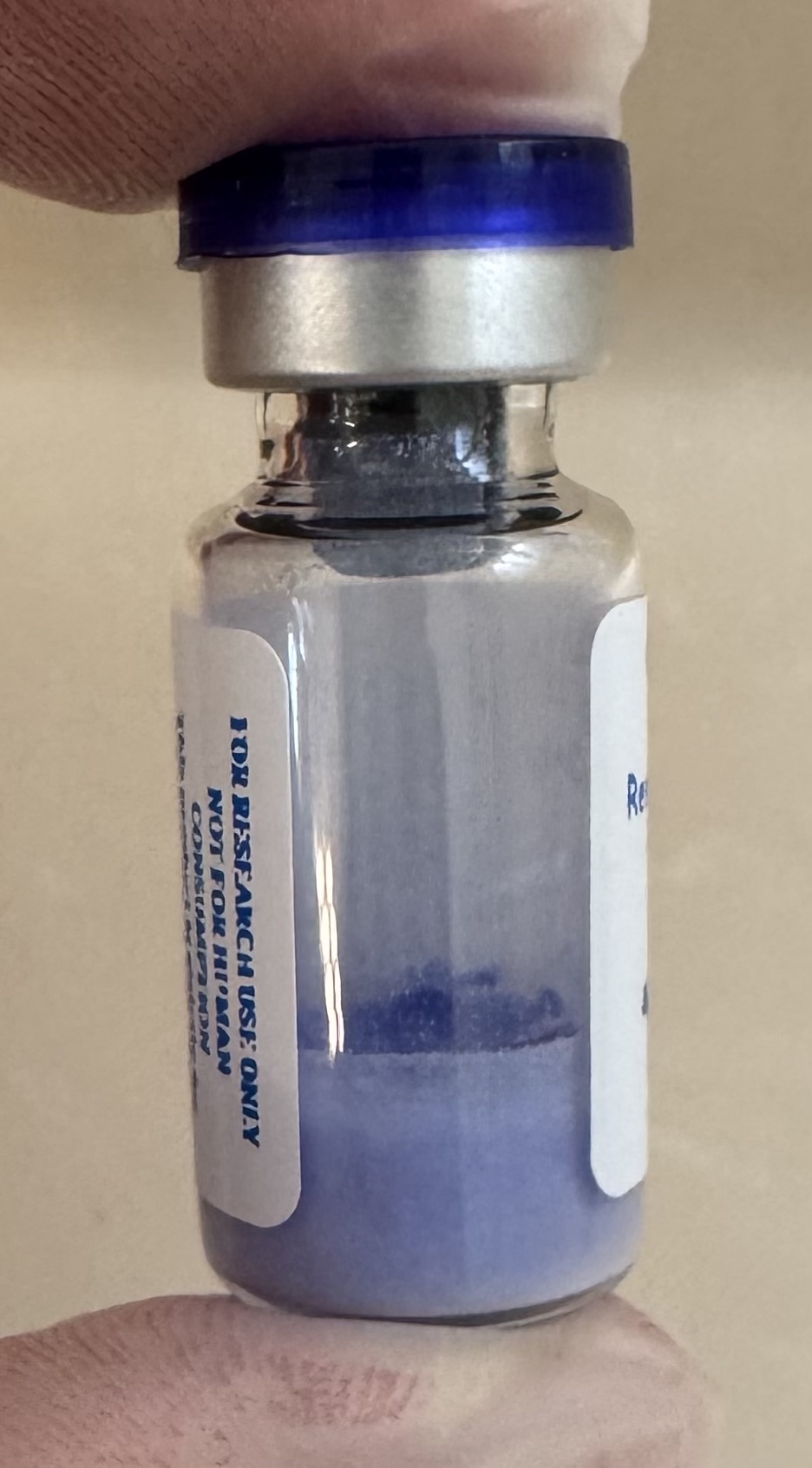
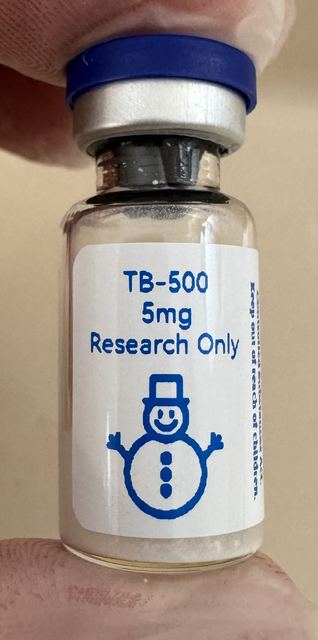
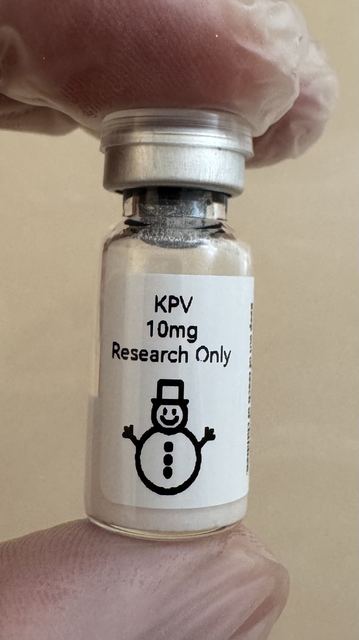
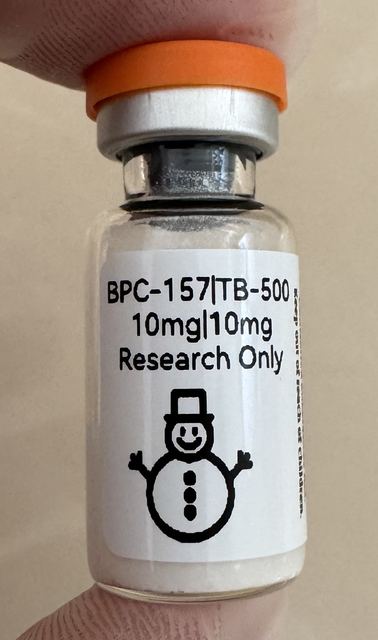
Copper tripeptide GHK-Cu: a research overview
Like a well-worn winter sweater, the copper tripeptide GHK-Cu has been around a long time. It was first described in 1980, and it has a long paper trail in skin and tissue-repair research.
Please note: Snowman Research does not offer dosing information or usage guidance of any kind. Everything we list, this item included, is sold strictly for research purposes and nothing else.
Published findings
Early work showed the tripeptide readily forms complexes with copper and helps cultured liver-cancer cells take up the metal (Nature, 1980) [1]. Since then, reviews have summarized wound-repair experiments in rodents and pigs [2], plus findings in connective tissue of the lung, bone, liver and the stomach lining [3]. Cosmetic studies using topical formulations have reported changes in skin appearance [2]. It's worth knowing that the best-known reviews were written by authors from a commercial skin-biology research group, and that well-controlled human trials of systemic GHK-Cu are absent from the cited literature. The FDA likewise describes human data for injectable GHK-Cu as limited [4].
Mechanism at a glance
GHK stands for glycyl-L-histidyl-L-lysine, a tripeptide naturally present in human plasma, saliva and urine whose levels fall with age [2]. Bound to copper, it is reported to influence both the build-up and breakdown of collagen and glycosaminoglycans and to adjust metalloproteinase activity [2]. Gene-expression analyses suggest it can nudge many biochemical pathways at once [3].
Regulatory & WADA notes
The FDA's compounding-risk page lists "GHK-Cu (for injectable routes of administration)" among substances once in category 2 whose nominations were withdrawn, pointing to immunogenicity risk and sparse human data [4]. GHK-Cu does not appear by name on WADA's 2026 Prohibited List; S0 applies to pharmacological substances lacking current government approval for human therapeutic use, and anti-doping bodies decide how it applies [5].
Thanks for reading. Stay warm, and keep your bench notes tidy.
Further reading
- Growth-modulating plasma tripeptide may function by facilitating copper uptake into cells. Nature. 1980;288(5792):715-7. PMID 7453802. https://pubmed.ncbi.nlm.nih.gov/7453802/
- GHK Peptide as a Natural Modulator of Multiple Cellular Pathways in Skin Regeneration. Biomed Res Int. 2015;2015:648108. PMID 26236730. https://pubmed.ncbi.nlm.nih.gov/26236730/
- Regenerative and Protective Actions of the GHK-Cu Peptide in the Light of the New Gene Data. Int J Mol Sci. 2018;19(7). PMID 29986520. https://pubmed.ncbi.nlm.nih.gov/29986520/
- Certain Bulk Drug Substances for Use in Compounding that May Present Significant Safety Risks. U.S. Food and Drug Administration, human drug compounding web page (accessed Oct 4, 2026). https://www.fda.gov/drugs/human-drug-compounding/certain-bulk-drug-substances-use-compounding-may-present-significant-safety-risks
- World Anti-Doping Code International Standard: Prohibited List 2026 (in effect 1 January 2026). World Anti-Doping Agency, 2026 Prohibited List. https://www.wada-ama.org/sites/default/files/2025-09/2026list_en_final_clean_september_2025.pdf
For laboratory research use only. This product is not intended for human or veterinary use and is not an FDA-approved drug; nothing on this page is medical advice. You must be 21 or older to purchase.