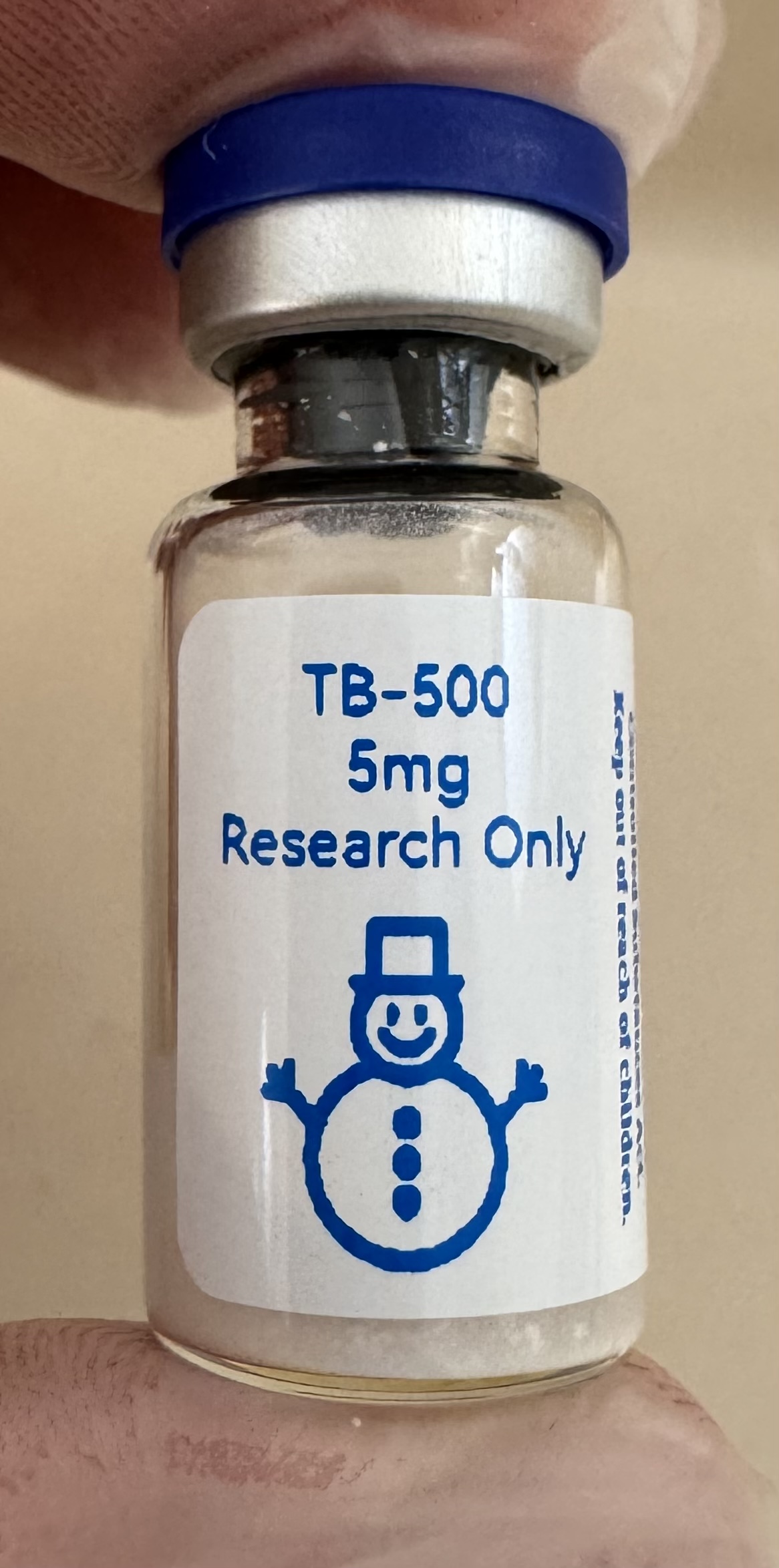
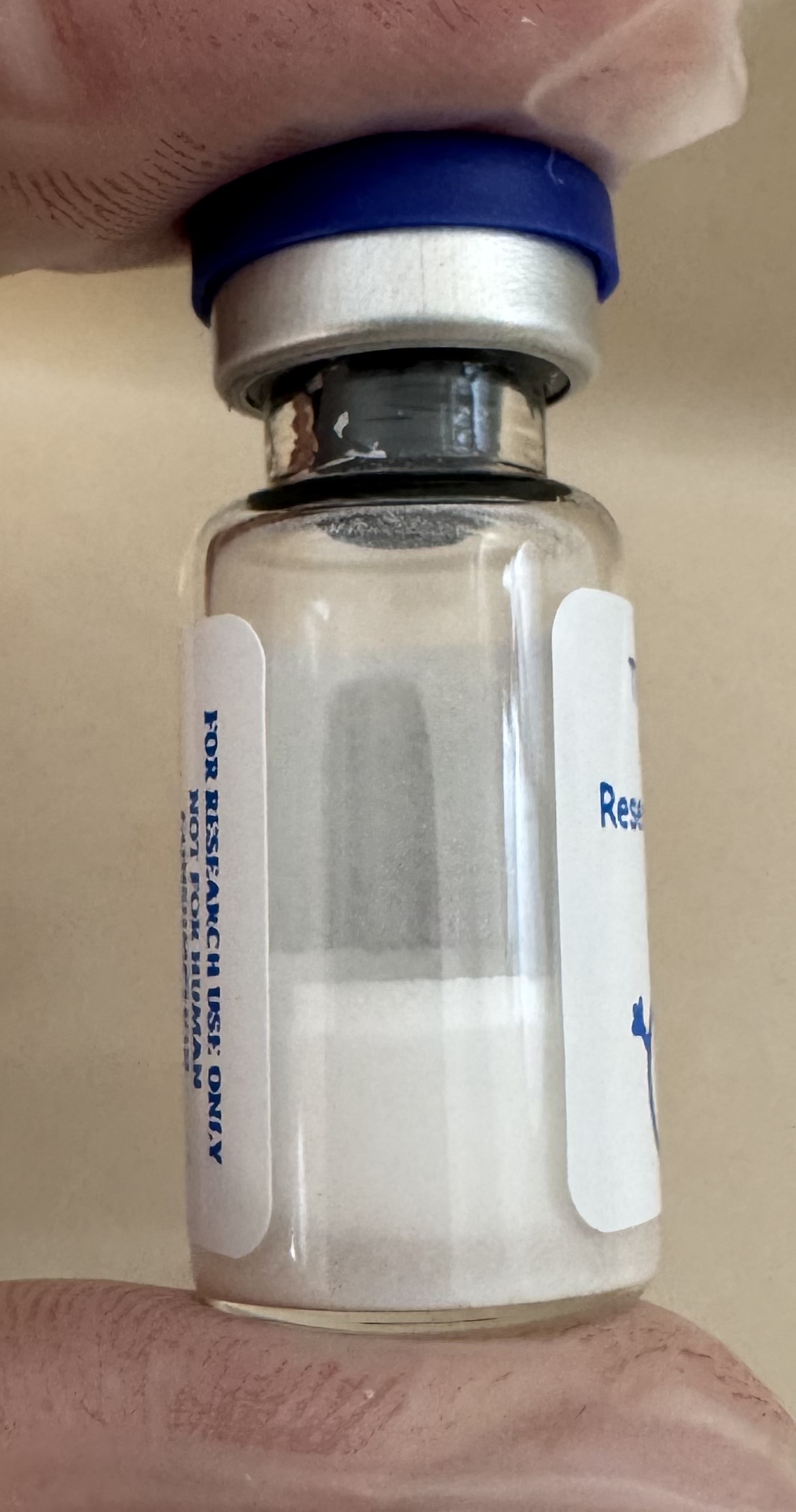
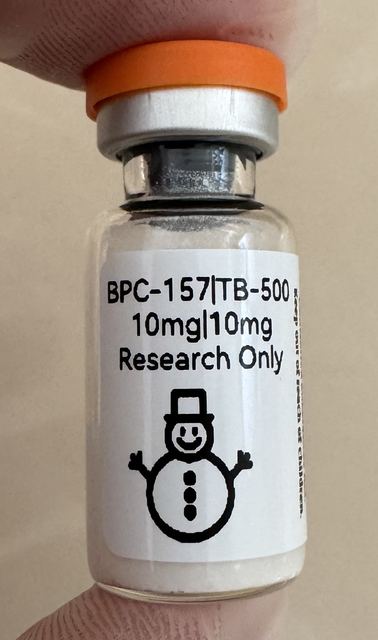
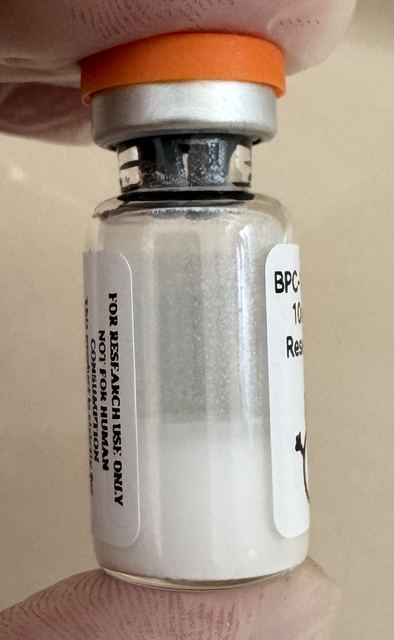
TB-500 vs thymosin beta-4 fragment: a research overview
On a quiet evening, it's worth untangling a common mix-up. TB-500 is usually described as a thymosin beta-4 fragment peptide, and while it is related to full-length thymosin beta-4, the two aren't interchangeable in the literature.
Please note: Snowman Research does not offer dosing information or usage guidance of any kind. Everything we list, this item included, is sold strictly for research purposes and nothing else.
Published findings
Nearly all published biology concerns the full-length protein, thymosin beta-4 (Tβ4). In mice that underwent coronary artery ligation, Tβ4 treatment increased integrin-linked kinase and Akt activity in the heart, supported early survival of heart-muscle cells and improved cardiac function (Nature, 2004) [1]. Three years later, another Nature paper showed Tβ4 is required for coronary vessel development in mice and can stimulate quiescent adult epicardial tissue to produce new vascular cell types [2]. A 2012 review gathered findings from skin, eye, heart and brain models and noted clinical programs in dermal and corneal repair [3]. The shorter fragment sold as TB-500 is far less studied: the FDA reports having found no human exposure data for it [4].
Mechanism at a glance
Tβ4 is a small, naturally occurring peptide that sequesters actin, the protein behind cell shape and movement [3]. After tissue injury, platelets, macrophages and other cells release it, and it supports cell migration and the mobilization of progenitor cells [3]. Mechanistic work tied it to a complex with PINCH and integrin-linked kinase that switches on Akt survival signaling [1]. TB-500 refers to a synthetic segment of the molecule, listed by the FDA as thymosin beta-4 fragment (LKKTETQ) [4].
Regulatory & WADA notes
The FDA's compounding-risk page includes "Thymosin beta-4, fragment (LKKTETQ), also known as TB-500" among substances formerly in category 2 whose nominations were withdrawn, citing aggregation, impurity and immunogenicity concerns [4]. For athletes, the 2026 List groups TB-500 with growth factor modulators: its section S2.3 entry for thymosin-β4 explicitly extends to derivatives such as TB-500, and the whole class is banned at all times [5].
Thanks for reading. Stay warm, and keep your bench notes tidy.
Further reading
- Thymosin beta4 activates integrin-linked kinase and promotes cardiac cell migration, survival and cardiac repair. Nature. 2004;432(7016):466-72. PMID 15565145. https://pubmed.ncbi.nlm.nih.gov/15565145/
- Thymosin beta4 induces adult epicardial progenitor mobilization and neovascularization. Nature. 2007;445(7124):177-82. PMID 17108969. https://pubmed.ncbi.nlm.nih.gov/17108969/
- Thymosin β4: a multi-functional regenerative peptide. Basic properties and clinical applications. Expert Opin Biol Ther. 2012;12(1):37-51. PMID 22074294. https://pubmed.ncbi.nlm.nih.gov/22074294/
- Certain Bulk Drug Substances for Use in Compounding that May Present Significant Safety Risks. U.S. Food and Drug Administration, human drug compounding web page (accessed Oct 4, 2026). https://www.fda.gov/drugs/human-drug-compounding/certain-bulk-drug-substances-use-compounding-may-present-significant-safety-risks
- World Anti-Doping Code International Standard: Prohibited List 2026 (in effect 1 January 2026). World Anti-Doping Agency, 2026 Prohibited List. https://www.wada-ama.org/sites/default/files/2025-09/2026list_en_final_clean_september_2025.pdf
For laboratory research use only. This product is not intended for human or veterinary use and is not an FDA-approved drug; nothing on this page is medical advice. You must be 21 or older to purchase.