GLOW vs KLOW vs Wolverine: what's in each vial
Three blends, four peptides, one question: what is actually inside each vial? This guide lines up the BPC-157 + TB-500 combo (the pairing other shops call "Wolverine"), GLOW and KLOW, milligram by milligram. It covers composition only. It makes no claims about what any blend does, and nothing here is for human or veterinary use.
Snowman Research does not offer dosing information or usage guidance of any kind. Everything on this page is reference material about research products sold for laboratory research only.
| Peptide | BPC-157 + TB-500 ("Wolverine") | GLOW | KLOW |
|---|---|---|---|
| GHK-Cu | — | 50mg | 50mg |
| BPC-157 | 10mg | 10mg | 10mg |
| TB-500 | 10mg | 10mg | 10mg |
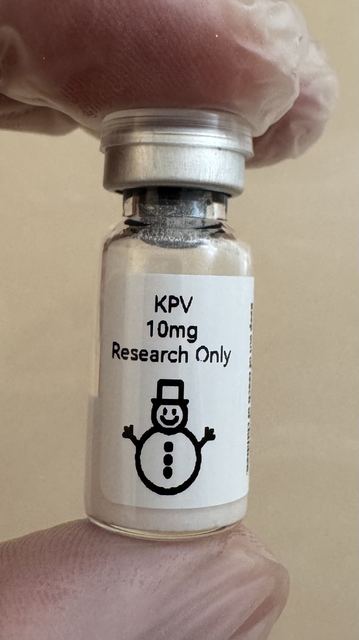
| KPV | — | — | 10mg |
| Total per vial | 20mg | 70mg | 80mg |
How the three blends stack up
All three share the same base: 10mg of BPC-157 and 10mg of TB-500. The combo vial stops there, at 20mg in total. GLOW keeps that pair and adds 50mg of GHK-Cu, for 70mg. KLOW is GLOW plus 10mg of KPV, for 80mg. So the real differences are the copper peptide (in GLOW and KLOW) and KPV (in KLOW only).
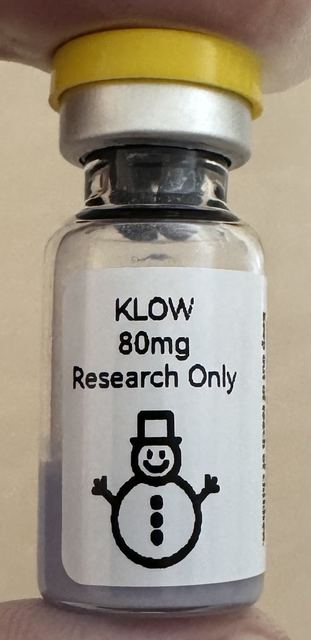
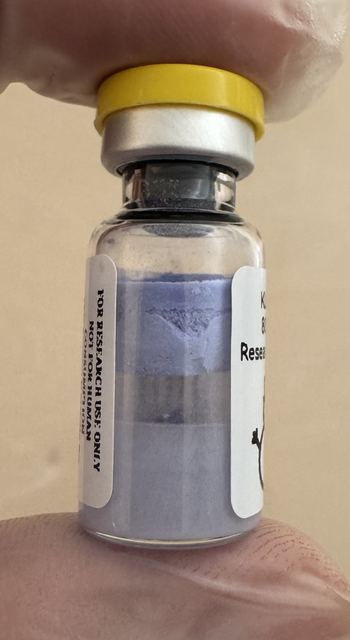
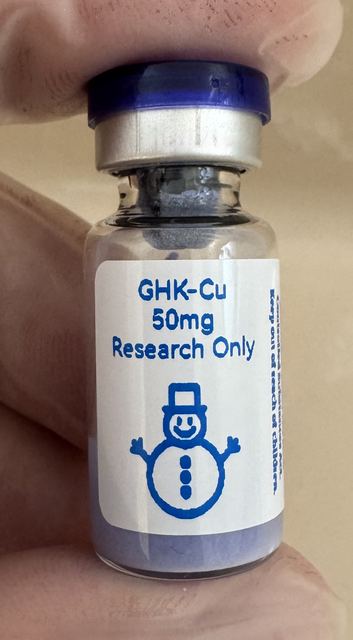
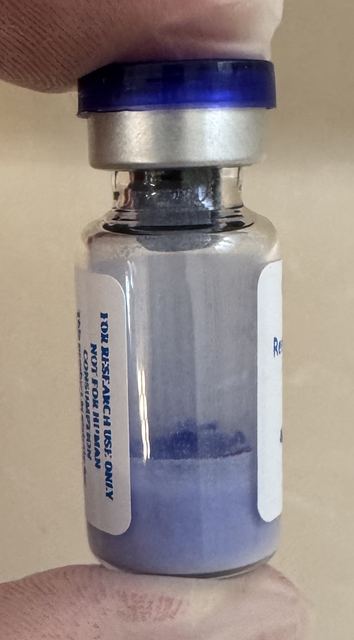
The copper in GHK-Cu tints the freeze-dried cake: GLOW's powder is blue and KLOW's cake is blue-violet.
The four ingredients
- GHK-Cu: the copper complex of the tripeptide glycyl-L-histidyl-L-lysine. GHK itself occurs naturally in human plasma, saliva and urine[1].
- BPC-157: a synthetic peptide of 15 residues, derived from a protein fraction ("body protection compound") described in human gastric juice[2].
- TB-500: a synthetic fragment of thymosin beta-4, listed by the FDA as thymosin beta-4 fragment (LKKTETQ)[3].
- KPV: the tripeptide lysine-proline-valine, matching amino acids 11 through 13 of alpha-melanocyte-stimulating hormone[4].
Regulatory notes
The FDA's compounding-risk page lists BPC-157 and the TB-500 fragment among substances formerly in category 2 whose nominations were withdrawn[3]. WADA's 2026 Prohibited List names BPC-157 in section S0 and covers TB-500 under section S2.3[5]. None of these blends is an approved medicine.
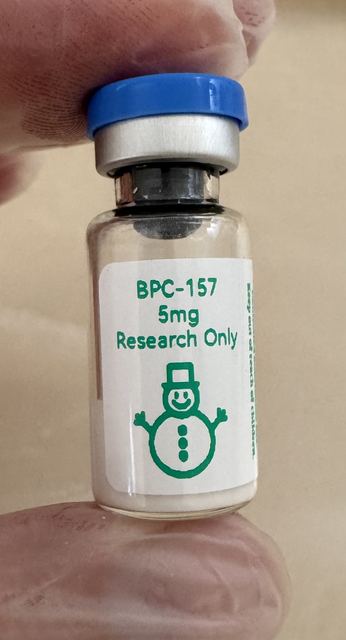
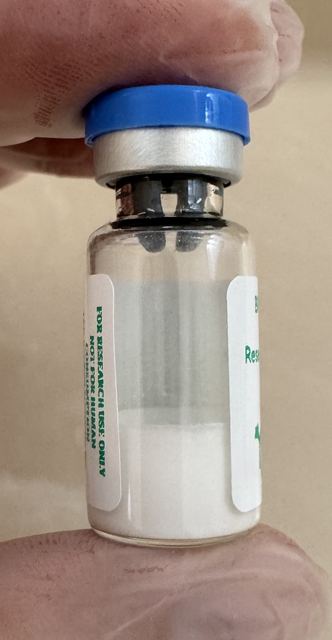
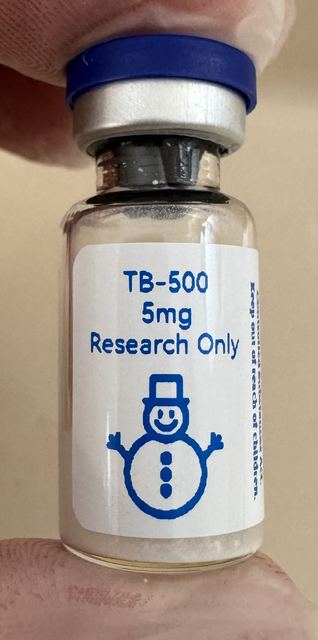
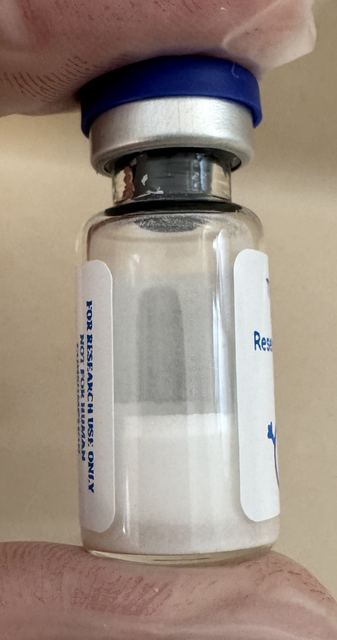
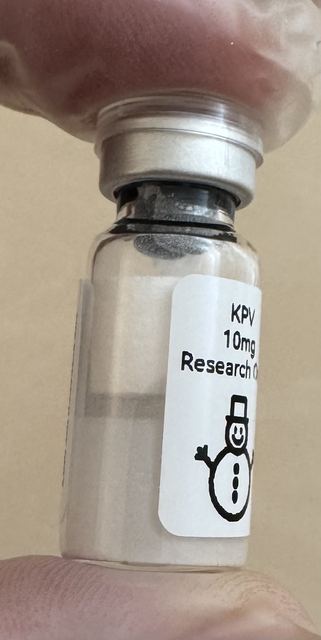
On our shelf
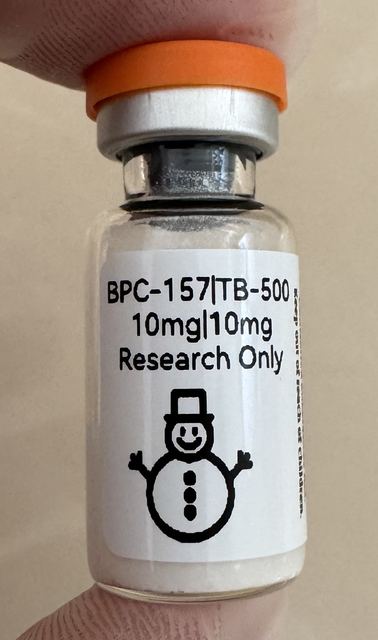
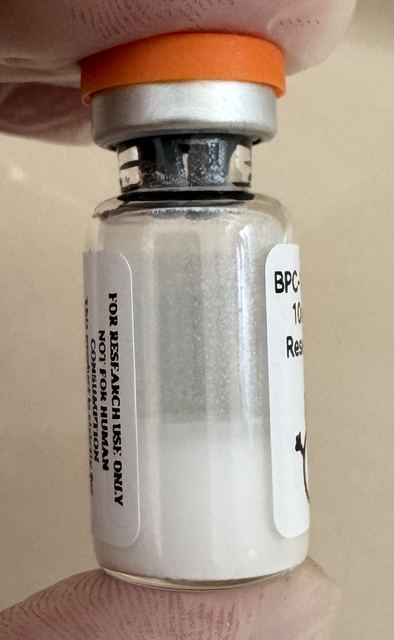
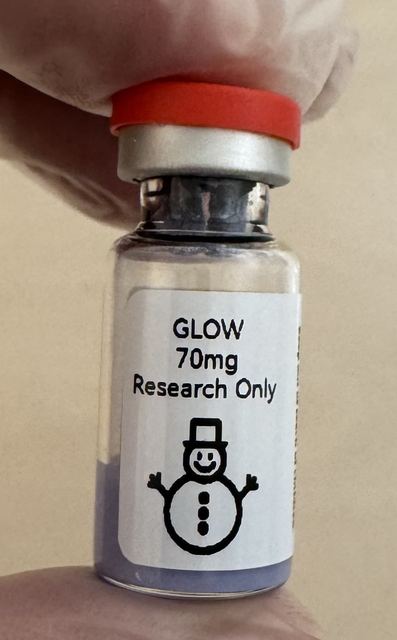
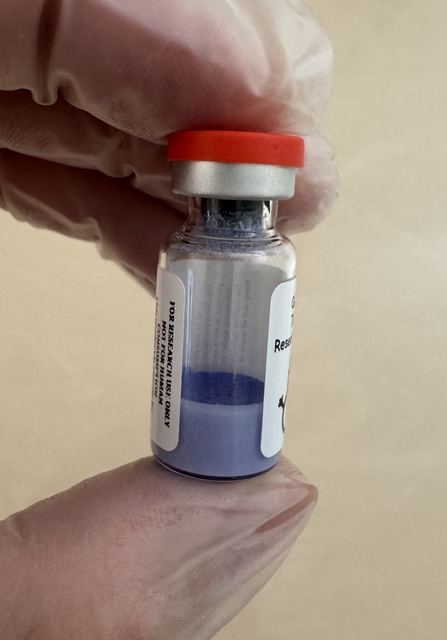
Sources
- GHK Peptide as a Natural Modulator of Multiple Cellular Pathways in Skin Regeneration. Biomed Res Int. 2015;2015:648108. PMID 26236730. https://pubmed.ncbi.nlm.nih.gov/26236730/
- The promoting effect of pentadecapeptide BPC 157 on tendon healing involves tendon outgrowth, cell survival, and cell migration. J Appl Physiol (1985). 2011;110(3):774-80. PMID 21030672. https://pubmed.ncbi.nlm.nih.gov/21030672/
- Certain Bulk Drug Substances for Use in Compounding that May Present Significant Safety Risks. U.S. Food and Drug Administration, human drug compounding web page (accessed Oct 4, 2026). https://www.fda.gov/drugs/human-drug-compounding/certain-bulk-drug-substances-use-compounding-may-present-significant-safety-risks
- Melanocortin-derived tripeptide KPV has anti-inflammatory potential in murine models of inflammatory bowel disease. Inflamm Bowel Dis. 2008;14(3):324-31. PMID 18092346. https://pubmed.ncbi.nlm.nih.gov/18092346/
- World Anti-Doping Code International Standard: Prohibited List 2026 (in effect 1 January 2026). World Anti-Doping Agency. https://www.wada-ama.org/sites/default/files/2025-09/2026list_en_final_clean_september_2025.pdf
For laboratory research use only. Not for human or veterinary use, not FDA-approved, and nothing on this page is medical advice. You must be 21 or older to purchase.