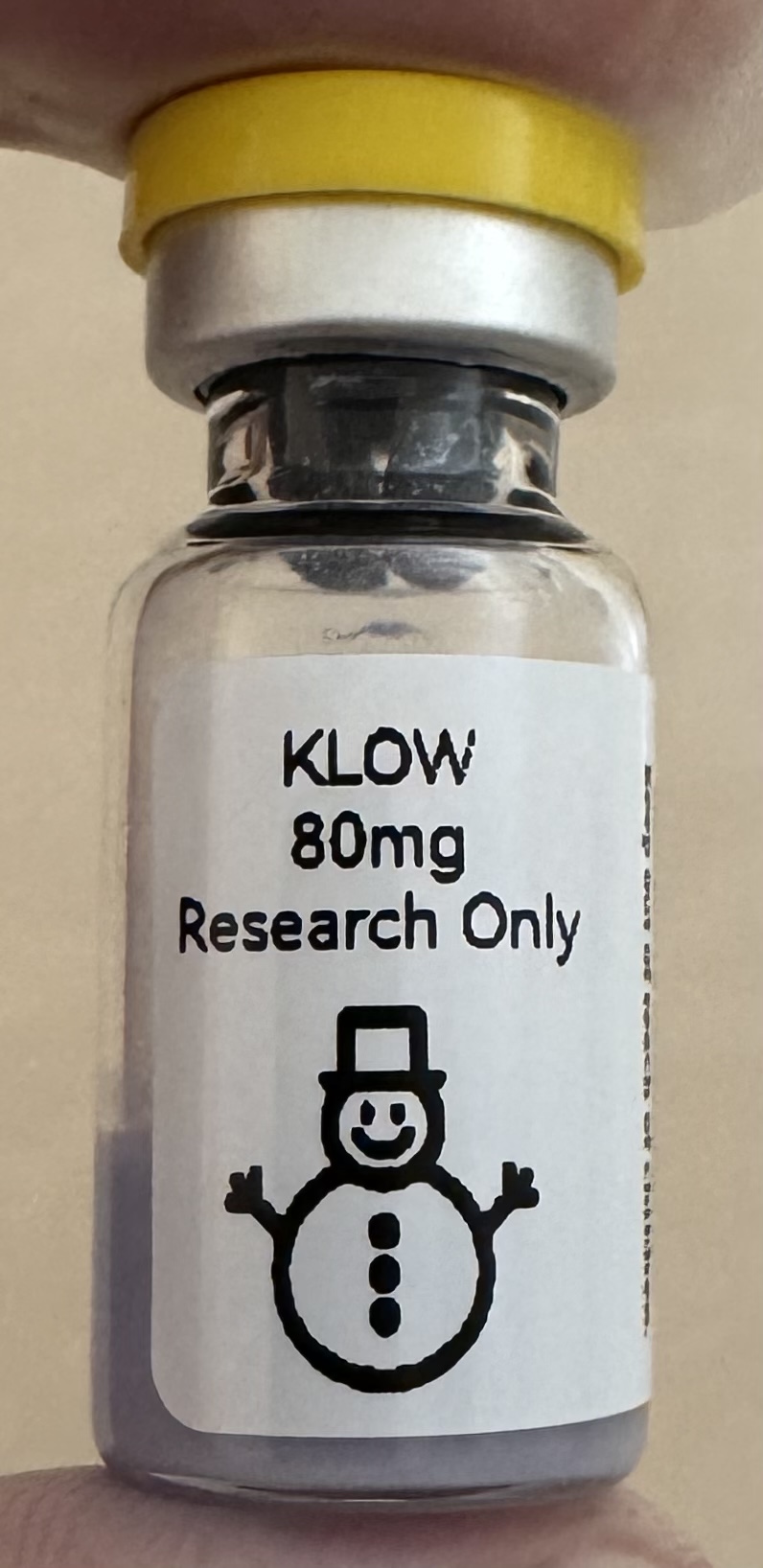
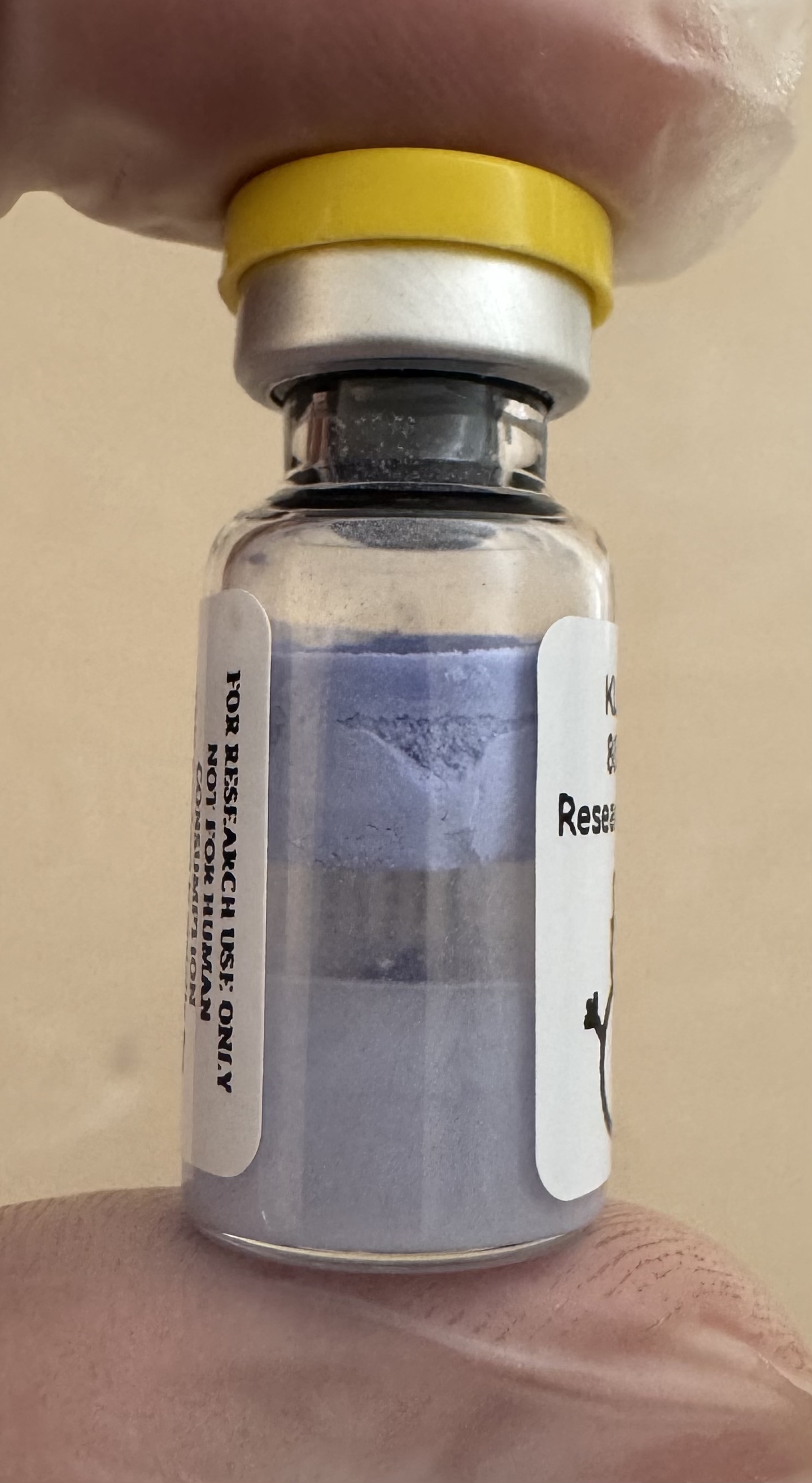
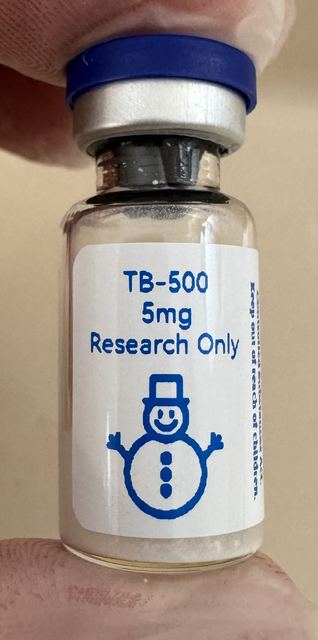
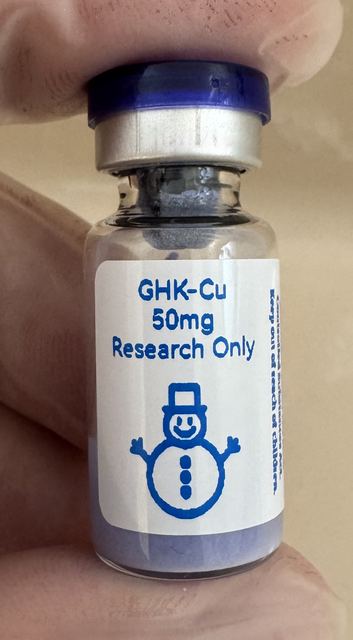
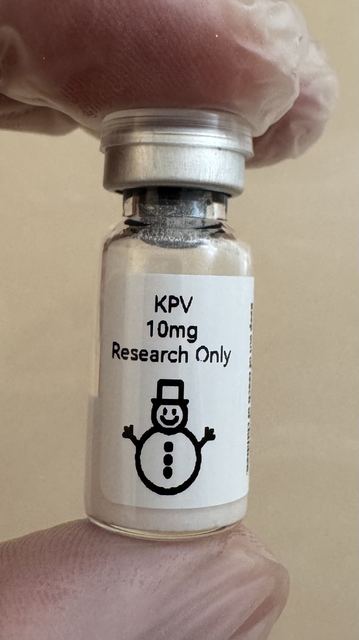
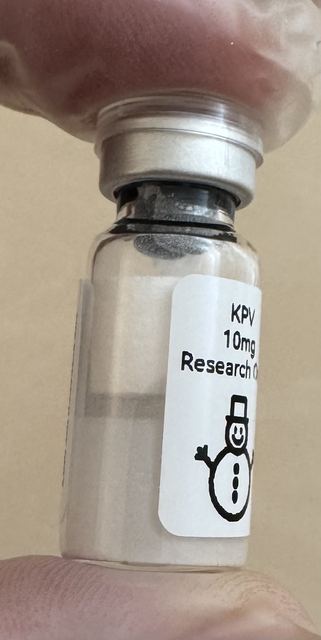
KLOW blend (GHK-Cu, BPC-157, KPV, TB-500): research on each component
KLOW is the four-peptide cousin of GLOW; in any KLOW vs GLOW peptide comparison, the only difference is that KLOW adds KPV to GHK-Cu, BPC-157 and TB-500. As with most blends, the published research covers the parts rather than the whole.
Please note: Snowman Research does not offer dosing information or usage guidance of any kind. Everything we list, this item included, is sold strictly for research purposes and nothing else.
Published findings
Each of the four peptides has been explored separately, mostly in cells and animals. Mice given KPV in their drinking water developed less severe chemically induced colitis [1]. GHK reviews summarize repair findings in several tissue models [2]. BPC-157 research centers on rodent injury studies [3], while the thymosin beta-4 literature leans on wound, corneal, cardiac and nervous-system models [4]. Per the FDA, neither KPV nor the TB-500 fragment has been tied to any identified human exposure [5]. The cited literature doesn't examine how these four behave when combined.
Mechanism at a glance
- GHK-Cu: a naturally occurring copper complex of a tripeptide, linked to collagen synthesis and broad gene-expression shifts [2].
- BPC-157: a synthetic 15-residue peptide thought to act through angiogenic and growth-factor pathways [3].
- KPV: Lys-Pro-Val, taken up by the PepT1 transporter; in cell studies it quieted NF-κB and MAP kinase signaling [1].
- TB-500: a synthetic piece of thymosin beta-4, the actin-binding repair peptide [4].
Regulatory & WADA notes
The FDA lists every component of this blend (GHK-Cu for injectable routes, BPC-157, KPV and the TB-500 fragment) among substances formerly in compounding category 2 with nominations withdrawn [5]. In anti-doping terms, the 2026 List spells out BPC-157 (section S0) and TB-500 (section S2.3), both off-limits at all times, while leaving KPV and GHK-Cu unnamed; S0 still reaches any pharmacological substance without government approval for human therapeutic use [6].
Thanks for reading. Stay warm, and keep your bench notes tidy.
Further reading
- PepT1-mediated tripeptide KPV uptake reduces intestinal inflammation. Gastroenterology. 2008;134(1):166-78. PMID 18061177. https://pubmed.ncbi.nlm.nih.gov/18061177/
- Regenerative and Protective Actions of the GHK-Cu Peptide in the Light of the New Gene Data. Int J Mol Sci. 2018;19(7). PMID 29986520. https://pubmed.ncbi.nlm.nih.gov/29986520/
- BPC 157 and Standard Angiogenic Growth Factors. Gastrointestinal Tract Healing, Lessons from Tendon, Ligament, Muscle and Bone Healing. Curr Pharm Des. 2018;24(18):1972-1989. PMID 29998800. https://pubmed.ncbi.nlm.nih.gov/29998800/
- Thymosin β4: a multi-functional regenerative peptide. Basic properties and clinical applications. Expert Opin Biol Ther. 2012;12(1):37-51. PMID 22074294. https://pubmed.ncbi.nlm.nih.gov/22074294/
- Certain Bulk Drug Substances for Use in Compounding that May Present Significant Safety Risks. U.S. Food and Drug Administration, human drug compounding web page (accessed Oct 4, 2026). https://www.fda.gov/drugs/human-drug-compounding/certain-bulk-drug-substances-use-compounding-may-present-significant-safety-risks
- World Anti-Doping Code International Standard: Prohibited List 2026 (in effect 1 January 2026). World Anti-Doping Agency, 2026 Prohibited List. https://www.wada-ama.org/sites/default/files/2025-09/2026list_en_final_clean_september_2025.pdf
For laboratory research use only. This product is not intended for human or veterinary use and is not an FDA-approved drug; nothing on this page is medical advice. You must be 21 or older to purchase.