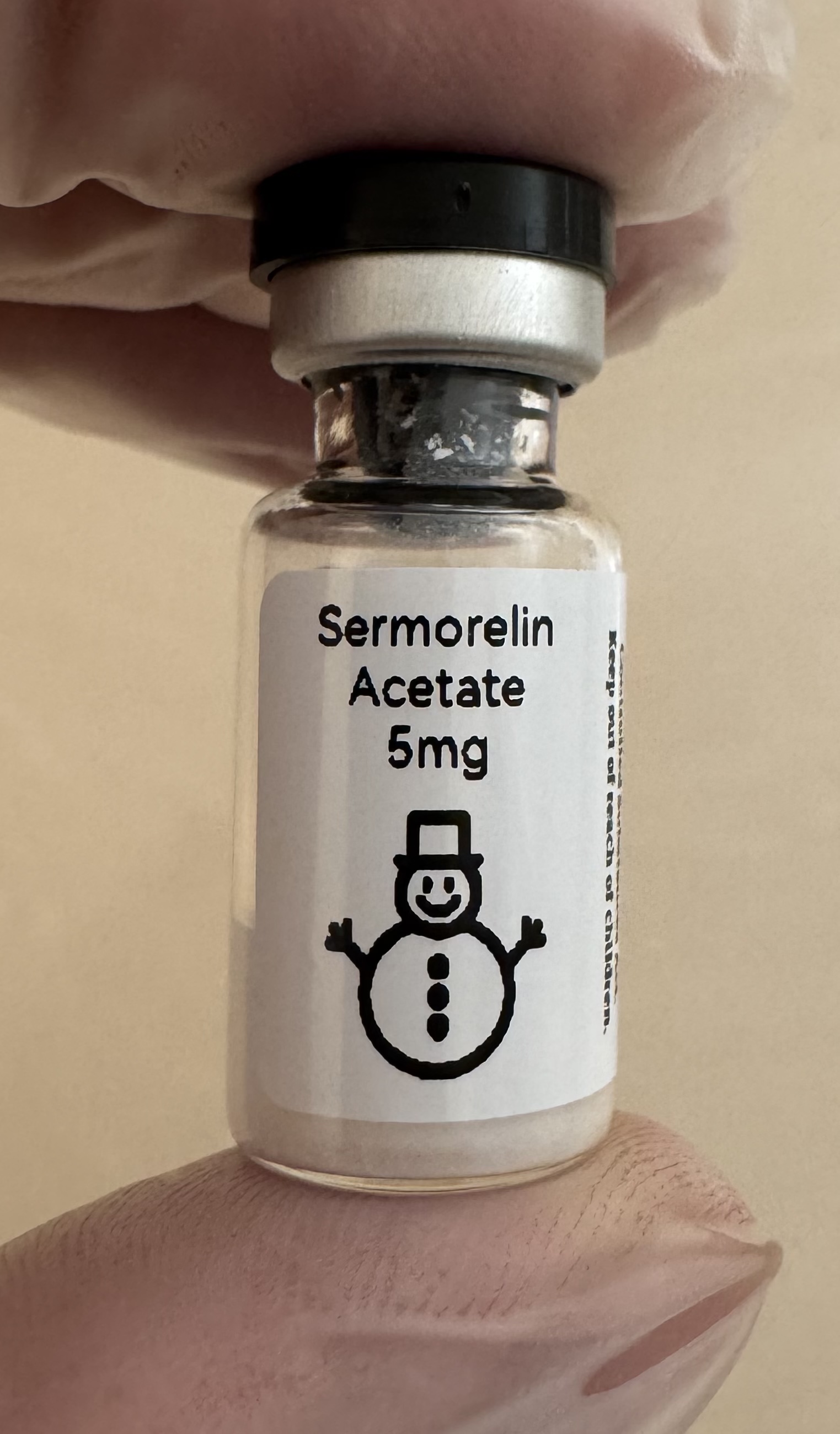
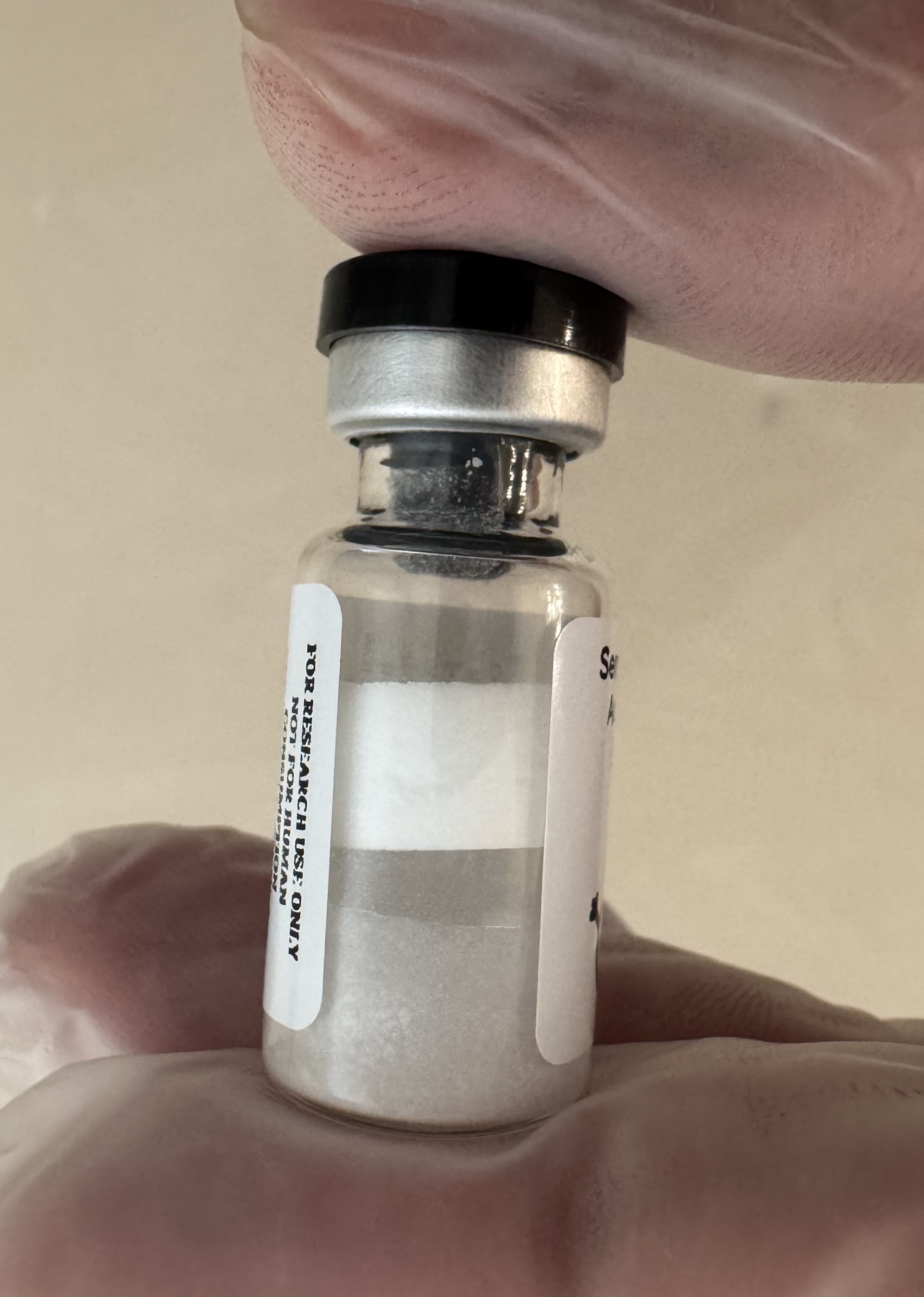
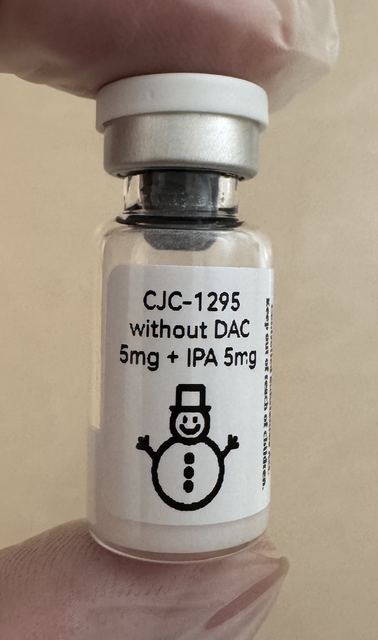
Sermorelin (GHRH 1-29): a research overview
Sermorelin carries a bit of history with it, a little like an old ski lodge. It was once an approved medicine in the United States and was later retired by its maker.
Please note: Snowman Research does not offer dosing information or usage guidance of any kind. Everything we list, this item included, is sold strictly for research purposes and nothing else.
Published findings
Clinical research on sermorelin dates mainly to the 1990s and focuses on children. A multicenter, open-label study treated 110 prepubertal children with growth hormone deficiency for up to a year; average growth rate climbed from 4.1 cm per year to 8.0 cm per year at six months and 7.2 cm per year at twelve months, without adverse biochemical or hormonal changes [1]. A 1999 BioDrugs review judged it suitable as a diagnostic stimulation test for GH deficiency alongside standard tests, and found limited data supporting growth in some prepubertal children with idiopathic GH deficiency [2]. These are modest, open-label studies, so the evidence should be weighed accordingly.
Mechanism at a glance
Sermorelin corresponds to GHRH(1-29), the first 29 amino acids of growth hormone-releasing hormone, and acts as a GHRH analogue [1][2]. It has been used in research to prompt the pituitary to secrete growth hormone.
Regulatory & WADA notes
An FDA notice published in the Federal Register in 2013 lays out the timeline. GEREF (sermorelin acetate) was approved in 1990 as a diagnostic product for assessing pituitary GH secretion, and in 1997 for idiopathic GH deficiency in children with growth failure. Both products were discontinued in 2008, approval of both applications was withdrawn effective June 18, 2009, and the FDA concluded they had not been withdrawn for reasons of safety or effectiveness [3]. In sport, sermorelin falls under section S2.2.4 of WADA's 2026 List as a GHRH analogue, a group banned at all times [4].
Thanks for reading. Stay warm, and keep your bench notes tidy.
Further reading
- Once daily subcutaneous growth hormone-releasing hormone therapy accelerates growth in growth hormone-deficient children during the first year of therapy. Geref International Study Group. J Clin Endocrinol Metab. 1996;81(3):1189-96. PMID 8772599. https://pubmed.ncbi.nlm.nih.gov/8772599/
- Sermorelin: a review of its use in the diagnosis and treatment of children with idiopathic growth hormone deficiency. BioDrugs. 1999;12(2):139-57. PMID 18031173. https://pubmed.ncbi.nlm.nih.gov/18031173/
- Determination That GEREF (Sermorelin Acetate) Injection, 0.5 Milligrams Base/Vial and 1.0 Milligrams Base/Vial, and GEREF (Sermorelin Acetate) Injection, 0.05 Milligrams Base/Amp, Were Not Withdrawn From Sale for Reasons of Safety or Effectiveness. FDA notice, Federal Register 78 FR 14095 (Mar 4, 2013), Docket FDA-2012-P-1071. https://www.govinfo.gov/content/pkg/FR-2013-03-04/html/2013-04827.htm
- World Anti-Doping Code International Standard: Prohibited List 2026 (in effect 1 January 2026). World Anti-Doping Agency, 2026 Prohibited List. https://www.wada-ama.org/sites/default/files/2025-09/2026list_en_final_clean_september_2025.pdf
For laboratory research use only. This product is not intended for human or veterinary use and is not an FDA-approved drug; nothing on this page is medical advice. You must be 21 or older to purchase.